
10 Best Budget Audio Interfaces in 2026 (Focusrite, Motu & More)

- Disclosure: Some links in this article are affiliate links. We may earn a small commission if you make a purchase, at no extra cost to you.
You cannot record professional vocals with your laptop’s built-in microphone jack. It is noisy, has high latency, and sounds amateur.
To get studio-quality sound, you need a dedicated audio interface.
But you don’t need to spend $1,000 on an Apollo Twin X. In 2026, the “Budget” market is incredible. Interfaces under $300 now feature the same preamps found in high-end consoles.
Quick Picks: Our 3 Best Budget Audio Interfaces
Category | Plugin Name | Best For |
Best Overall | Focusrite Scarlett 2i2 (4th Gen) | Everyone (The Safe Bet) |
Best Sound Quality | Motu M2 | Premium Converters & LCD Screen |
Best Analog Vibe | SSL 2+ | The “4K” Legacy Button |
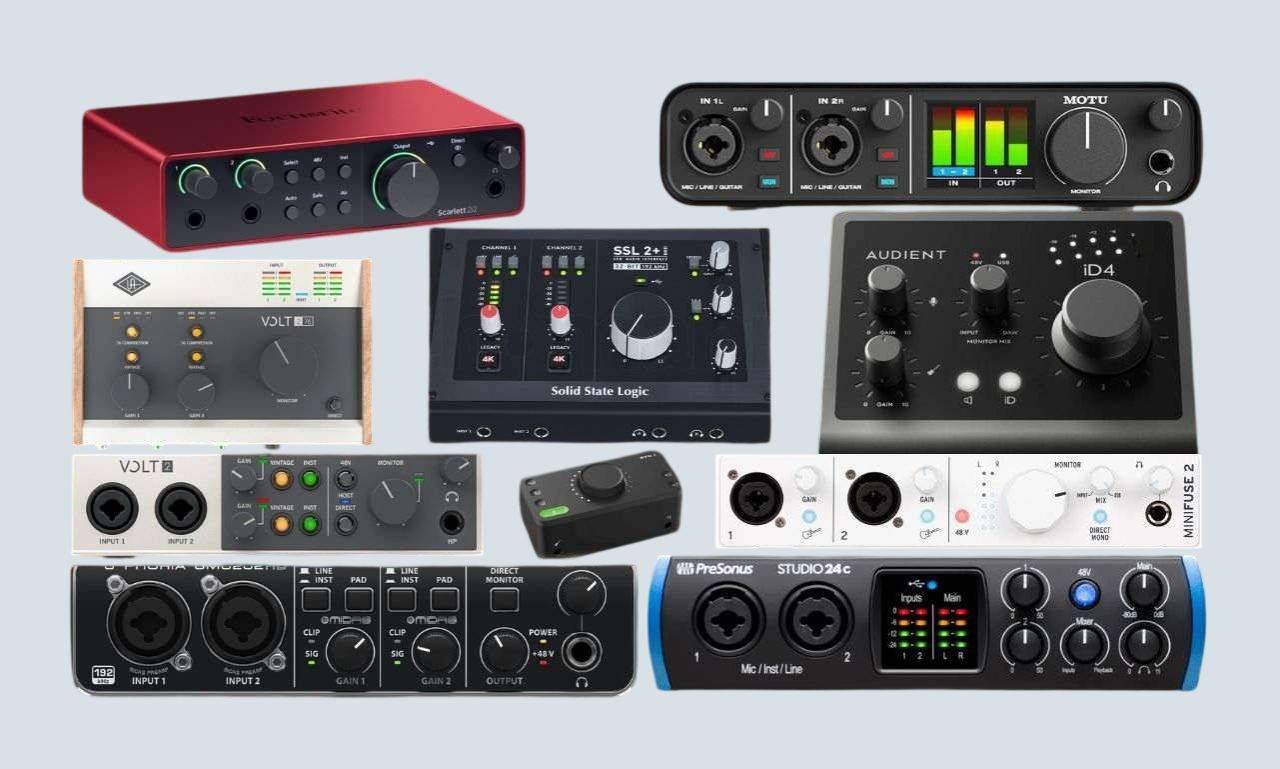
We tested the most popular budget interfaces for low latency, clean gain, and build quality. Here are the 10 best budget audio interfaces for your home studio.
1. Focusrite Scarlett 2i2 (4th Gen)
The Industry Standard
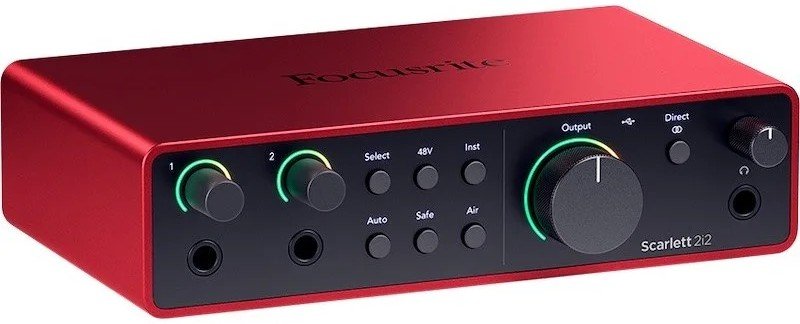
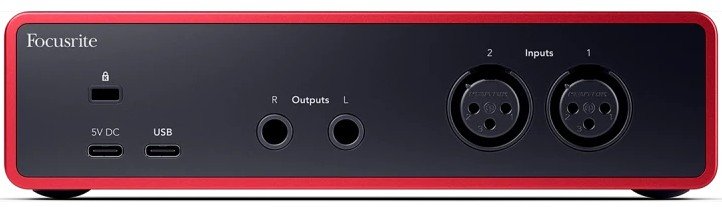
If you walk into any bedroom studio in the world, you will likely see a Red box on the desk. The Scarlett 2i2 is the best-selling interface of all time for a reason: it just works.
The new 4th Gen update is massive. It features updated preamps with a huge 69 dB of gain (enough for a Shure SM7B without a Cloudlifter) and an “Auto Gain” mode that sets your levels automatically, ensuring you never clip.
Why we love it: The “Air” mode adds a high-frequency boost that makes vocals sound expensive instantly.
Software Included: Ableton Live Lite, Hitmaker Expansion.
2. Motu M2
The Audiophile Choice
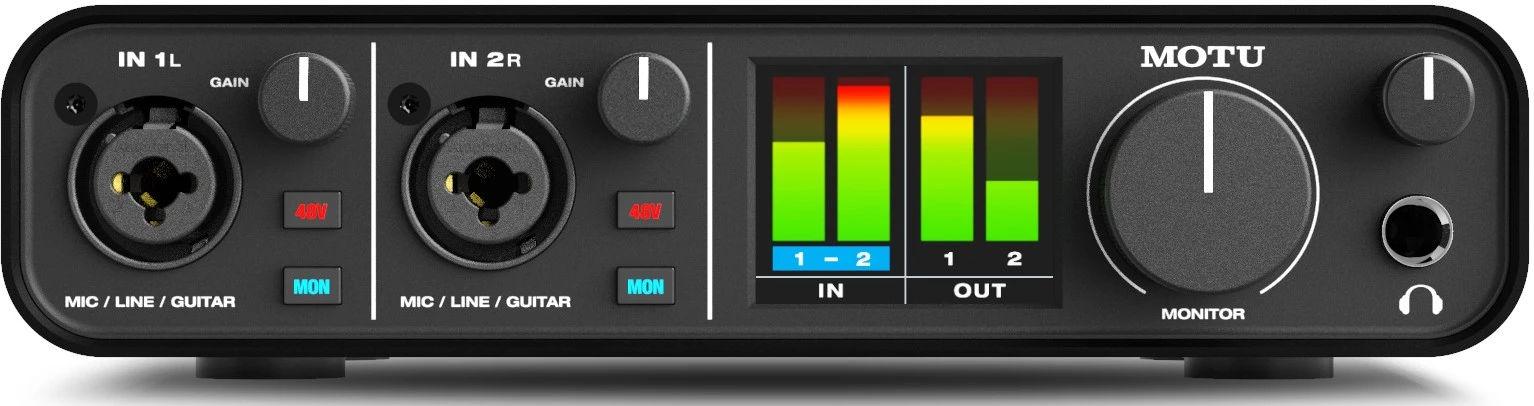
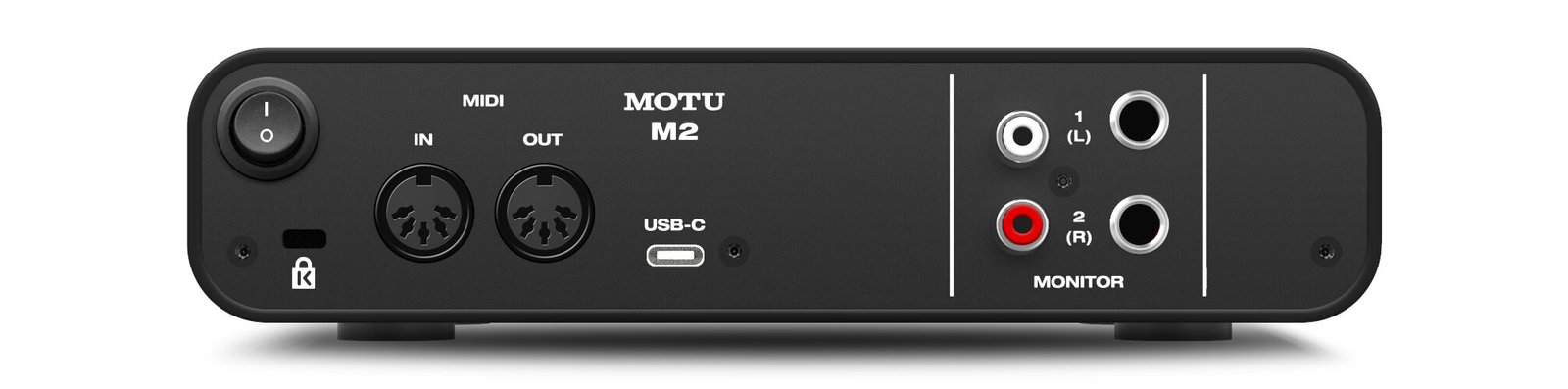
MOTU is famous for high-end converters, and they put that same technology into the affordable M2. The digital-to-analog (DAC) converters in this box are better than anything else in this price range.
It is also the only interface with a full-color LCD screen that shows your precise audio levels. No more guessing if you are clipping by looking at a tiny blinking light.
Best for: Mixing engineers who need pristine playback quality.
3. Solid State Logic SSL 2+ MKII
The “Pro Studio” Sound
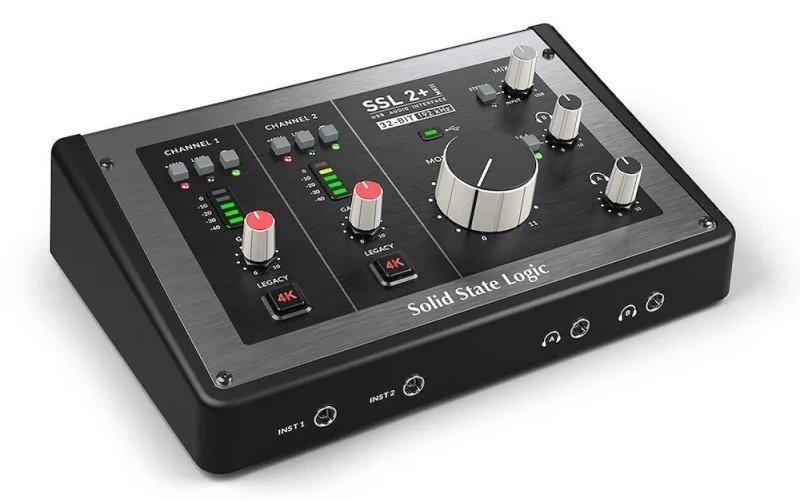
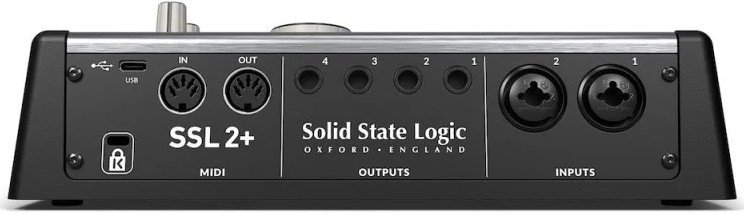
You have probably seen those massive million-dollar mixing consoles in famous studios. They are made by SSL. Now, you can have that same sound on your desk for a budget price.
The SSL 2+ is famous for its “Legacy 4K” button. When pressed, it engages a circuit that emulates the classic SSL 4000 console, adding high-frequency sparkle and grit to your vocals. The “Plus” model adds MIDI I/O (for your synths) and extra RCA outputs (perfect for DJs).
Why we love it: The build quality is industrial, and the preamps are shockingly quiet.
Best for: Hip Hop vocals, DJs, and producers with MIDI gear.
4. Universal Audio Volt 276
Best Built-In Compressor
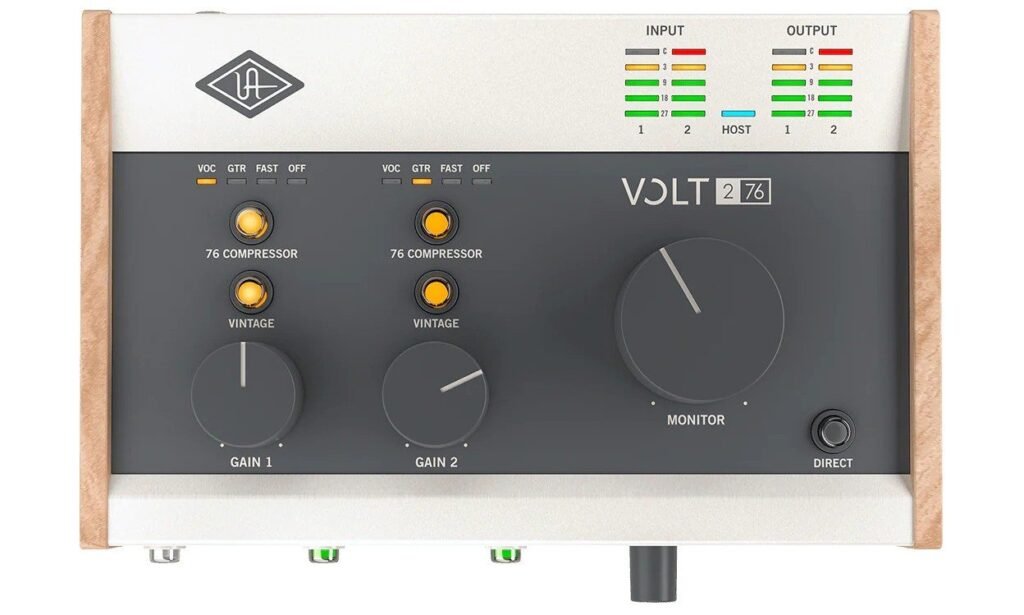
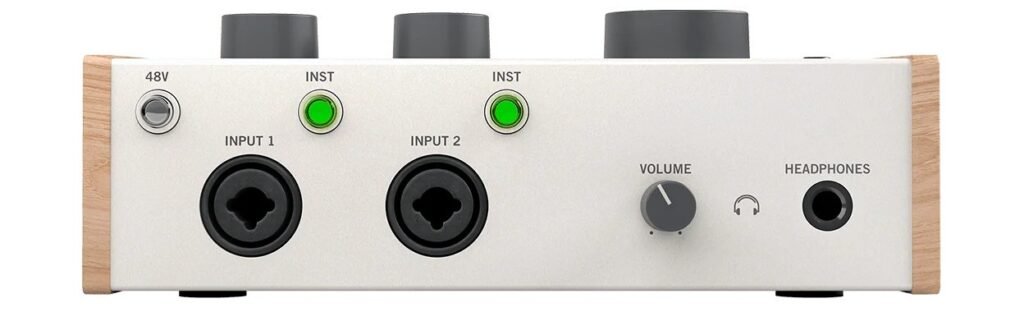
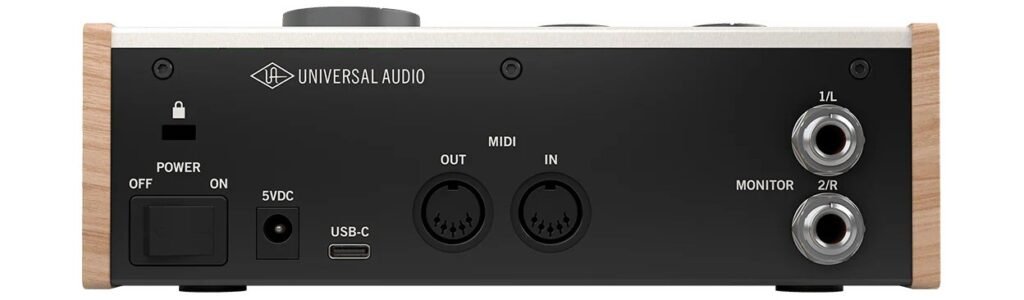
The Volt 276 is the big brother of the Volt 2. The difference? The “76” Compressor.
It has a built-in analog compression circuit based on the legendary 1176 Limiting Amplifier. You can press a button (“Vocal,” “Guitar,” “Fast”), and your sound gets compressed before it enters the computer. This gives you “radio-ready” vocals instantly, without the need for plugins.
Why pay more? The hardware compressor saves you mixing time.
Best for: Podcasters and vocalists who want a finished sound live.
5. Audient iD4 MkII
Best Preamps
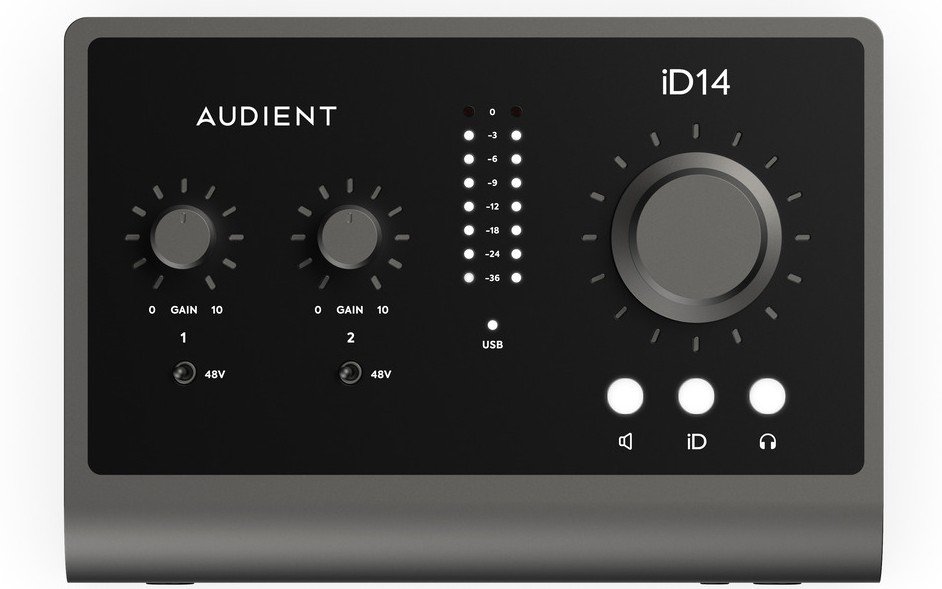
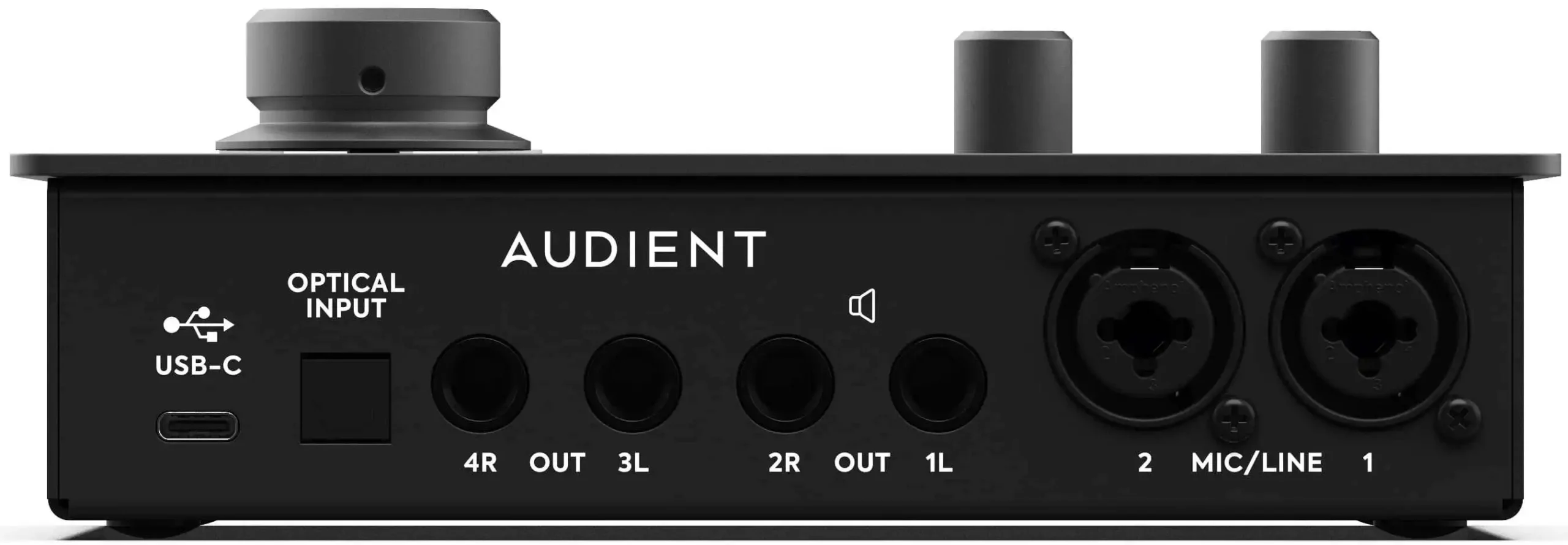
Audient puts the exact same microphone preamp from their $80,000 ASP8024 console into this tiny box. The result is a warm, thick, and incredibly clean recording tone.
Audient iD4 MkII features a “ScrollControl” mode where the big volume knob can be used to control parameters inside your DAW (like writing automation) just by hovering your mouse over them.
Best for: Vocalists who want the “Analog Console” sound.
6. Universal Audio Volt 2
Best Vintage Vibe
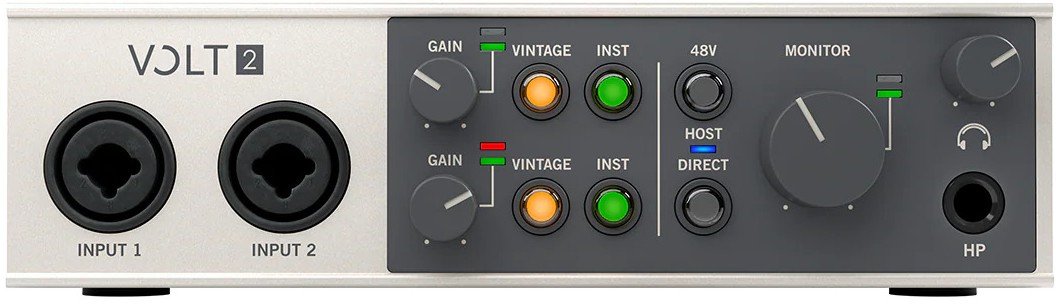
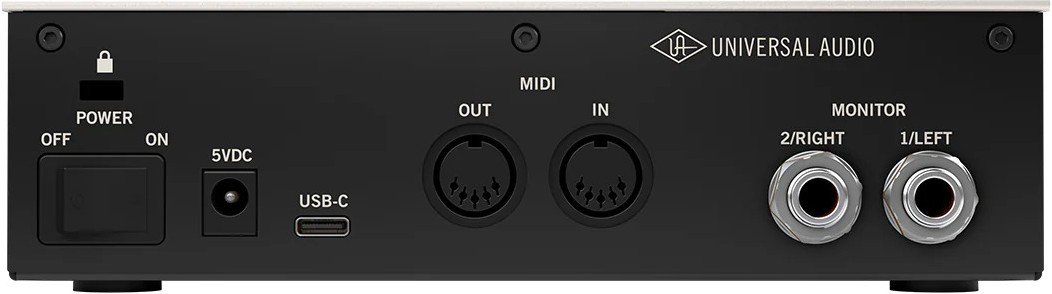
Universal Audio (UA) usually makes gear that costs $2,000. The Volt 2 is their entry into the budget market.
The killer feature here is the “Vintage” button. When pressed, it engages a circuit that emulates the classic Universal Audio 610 tube preamp. It adds saturation and harmonics to your voice before it even hits the computer.
Why we love it: It looks stylish on a desk and sounds “finished” right out of the box.
7. Arturia MiniFuse 2
Best Software Bundle
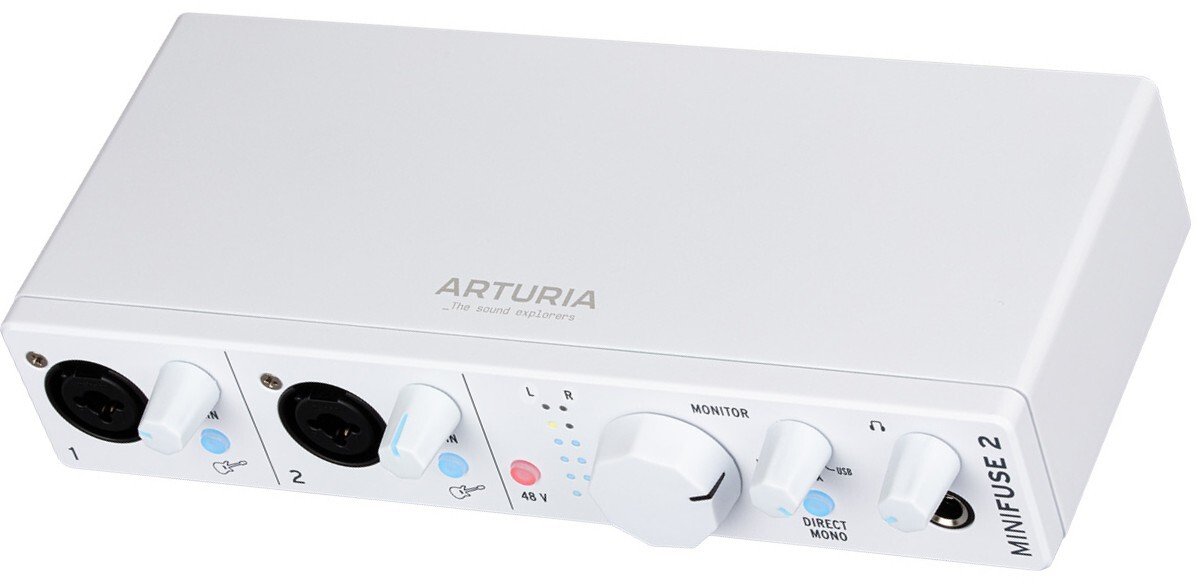
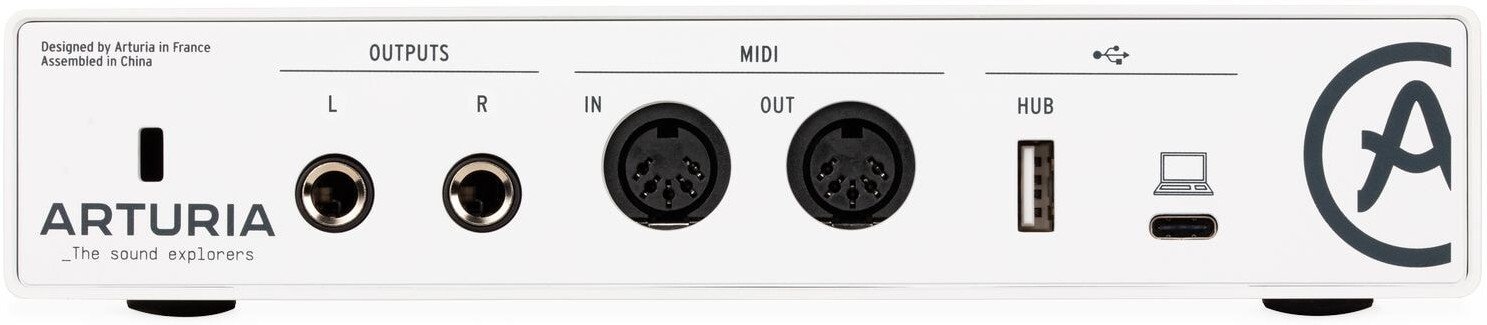
Arturia makes amazing synths, and their interface is great too. But the real reason to buy the MiniFuse is the software.
It comes with Arturia FX (Rev PLATE-140, Pre 1973, Delay TAPE-201, Chorus JUN-6). These are premium plugins that usually cost money. The interface itself also has a USB Hub on the back, allowing you to plug your MIDI keyboard directly into it (saving a USB slot on your laptop).
Best for: Producers who need extra USB ports and free plugins.
8. Audient Evo 4
The Smart Choice
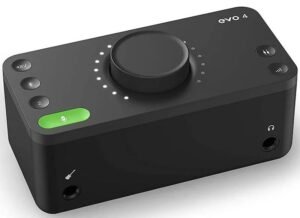
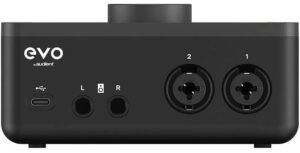
If you hate setting gain levels (or don’t know how), the Evo 4 is for you. Its killer feature is “Smartgain”.
You simply press the green button, sing into your mic, and the interface automatically sets the perfect volume level for you. It prevents clipping and ensures your recording is loud enough. It is tiny, portable, and perfect for beginners.
Best for: Beginners, Streamers, Travel.
9. PreSonus Studio 24c
The Tank
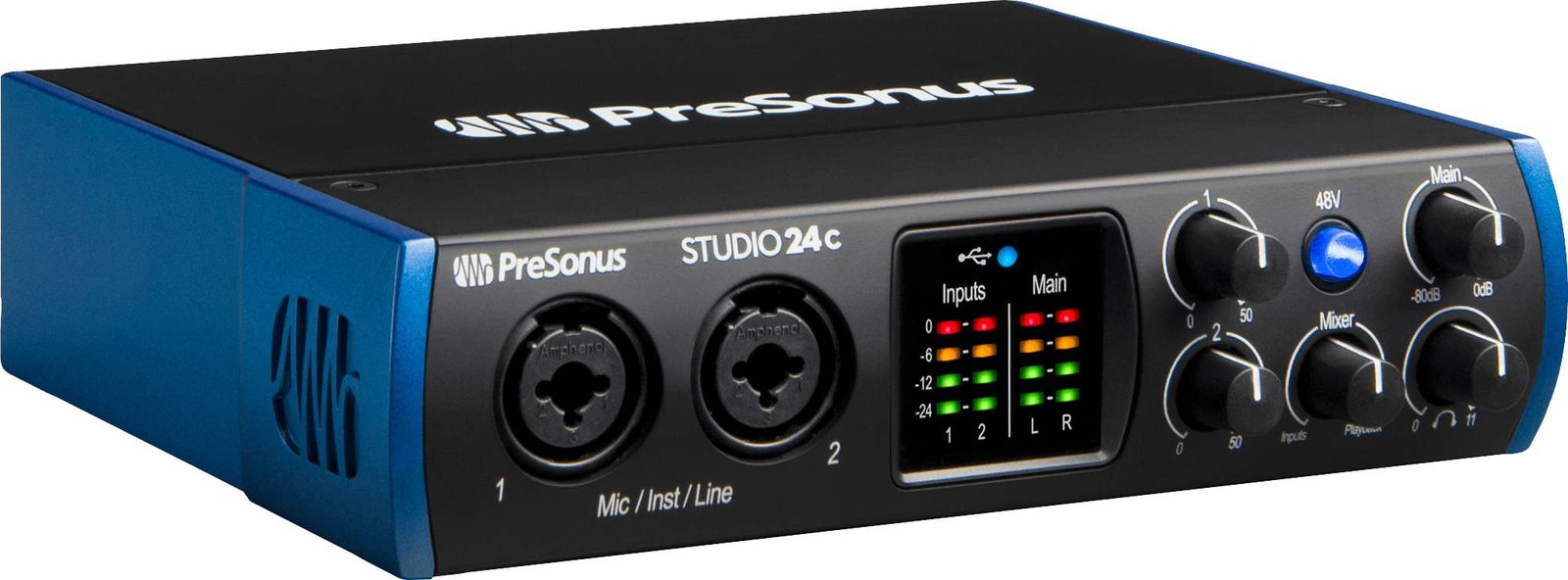
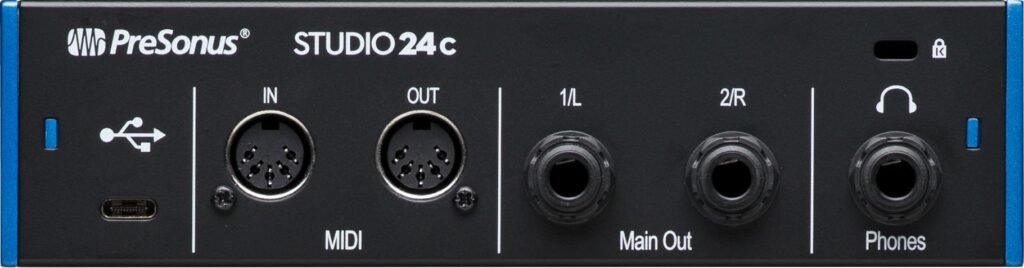
If you travel a lot, get the Studio 24c. It is built like a tank with a metal chassis and solid knobs. It also features clear LED level meters on the front (similar to the Motu but simpler).
It integrates perfectly with Studio One (PreSonus DAW), making setup instant if you use that software.
10. Behringer U-Phoria UMC202HD
Best Budget Option
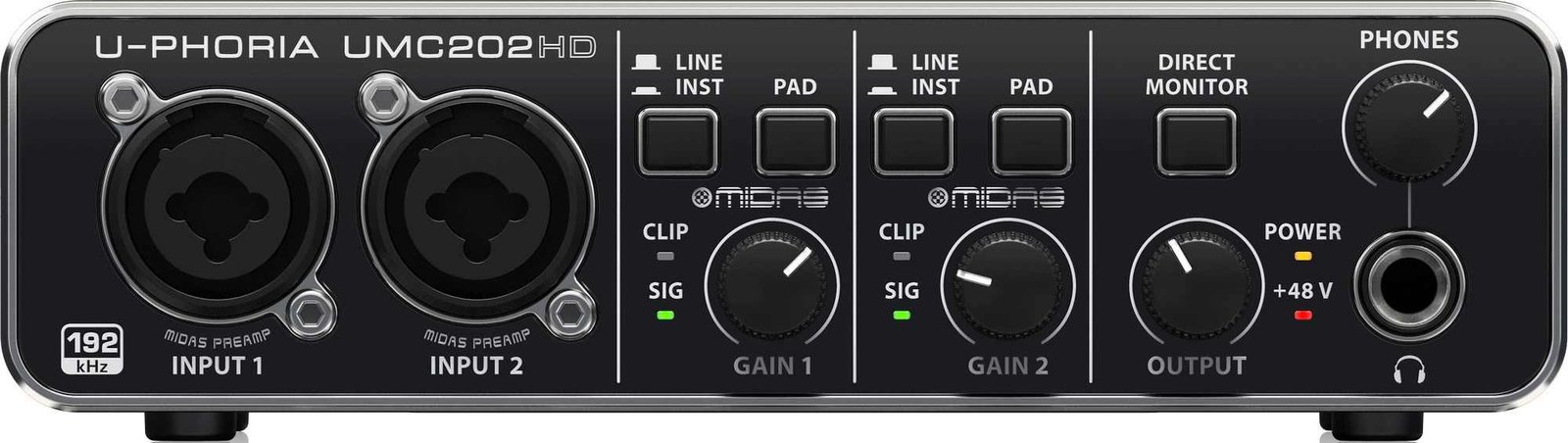
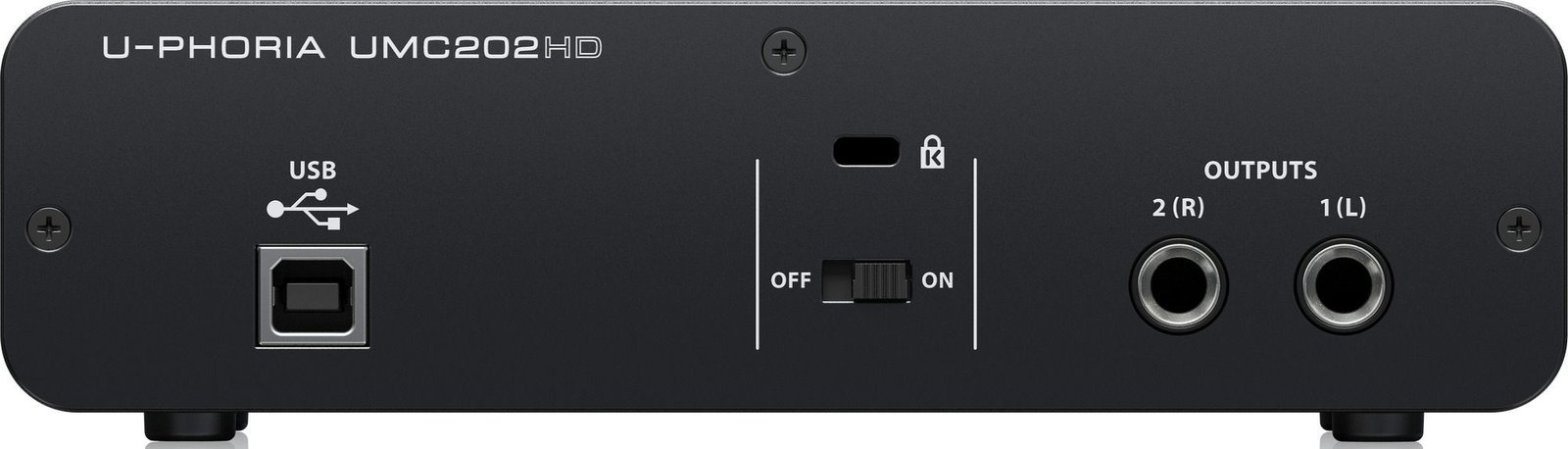
If you have less than $100, this is the one. Don’t let the price fool you; the MIDAS Preamps inside sound shockingly good. It records up to 192 kHz resolution (which is overkill, but impressive).
It feels a bit plasticky compared to the Focusrite, but for pure audio quality per dollar, it is unbeatable.
Best for: Beginners on a strict budget.
How to Choose Your Audio Interface?
1. Inputs & Outputs (I/O):
- Solo / 1 Input: Good for solo singers or podcasters.
- 2i2 / 2 Inputs: Allows you to record a microphone AND a guitar at the same time. This is the standard.
2. Loopback Audio:
If you plan to stream on Twitch or record YouTube tutorials, you need Loopback. This allows the interface to record the sound coming out of your computer (game audio/desktop audio) and send it back into the stream.
Winners: Audient iD4 and Motu M2 handle Loopback very well.
3. USB-C vs. USB-A:
Most modern interfaces are USB-C (Focusrite, Motu, Arturia). They usually come with cables for both, but USB-C is faster and more future-proof for Mac users.
FAQ:
Do I need a Cloudlifter for the Focusrite Scarlett?
For the Forcusrite 4th Gen Scarlett, No. The new 4th Gen preamps have enough gain (69 dB) to power a Shure SM7B without a Cloudlifter. If you have an older 3rd Gen model, you might still need one.
Will these audio interfaces work with FL Studio and Ableton?
Yes. All these interfaces use standard ASIO drivers (Windows) or Core Audio (Mac) and work seamlessly with every major DAW, including FL Studio, Ableton Live, Logic Pro, and Cubase.
Can I use these interfaces for streaming on Twitch?
Yes. All the interfaces listed here work for streaming. However, interfaces with a Loopback feature (like the Audient iD4 or Motu M2) are much better for streaming because they let you easily capture your game/desktop audio alongside your microphone.
Is USB-C better than USB-A for audio?
In terms of audio quality, there is no difference. However, USB-C is more convenient for modern laptops and can carry more power (bus power), meaning you often don’t need a separate power supply for the interface.
Final Thoughts
If you want the safest, most reliable choice with the best support, get the Focusrite Scarlett 2i2. It holds its resale value well and sounds fantastic.
If you are obsessed with audio fidelity and mixing, the Motu M2 is the technical winner.
Once you have your new interface set up and your vocals recorded, you might want to polish them. Check out our list of the best free autotune VST plugins to get that professional, pitch-perfect sound.
➤ You Might Also Like:
- Audient iD14 MKII Review: Is It The Best Mid-Range Audio Interface?
- 8 Best Free Drum VST Plugins for Punchy Beats
- 12 Best Free Reverb VST Plugins for Lush Vocals
- 15 Best Free Synth VST Plugins in 2026 (Serum Alternatives)
- 15 Best Free Piano VST Plugins in 2026

Amine Fariss is an independent audio engineer, music producer, and sound designer with over 20 years of experience working inside commercial and home studio environments. Amine created this platform to test and review VST plugins and music production software to help beginners and professionals build better mixes.