
Valhalla Supermassive Review | Free Reverb Plugin

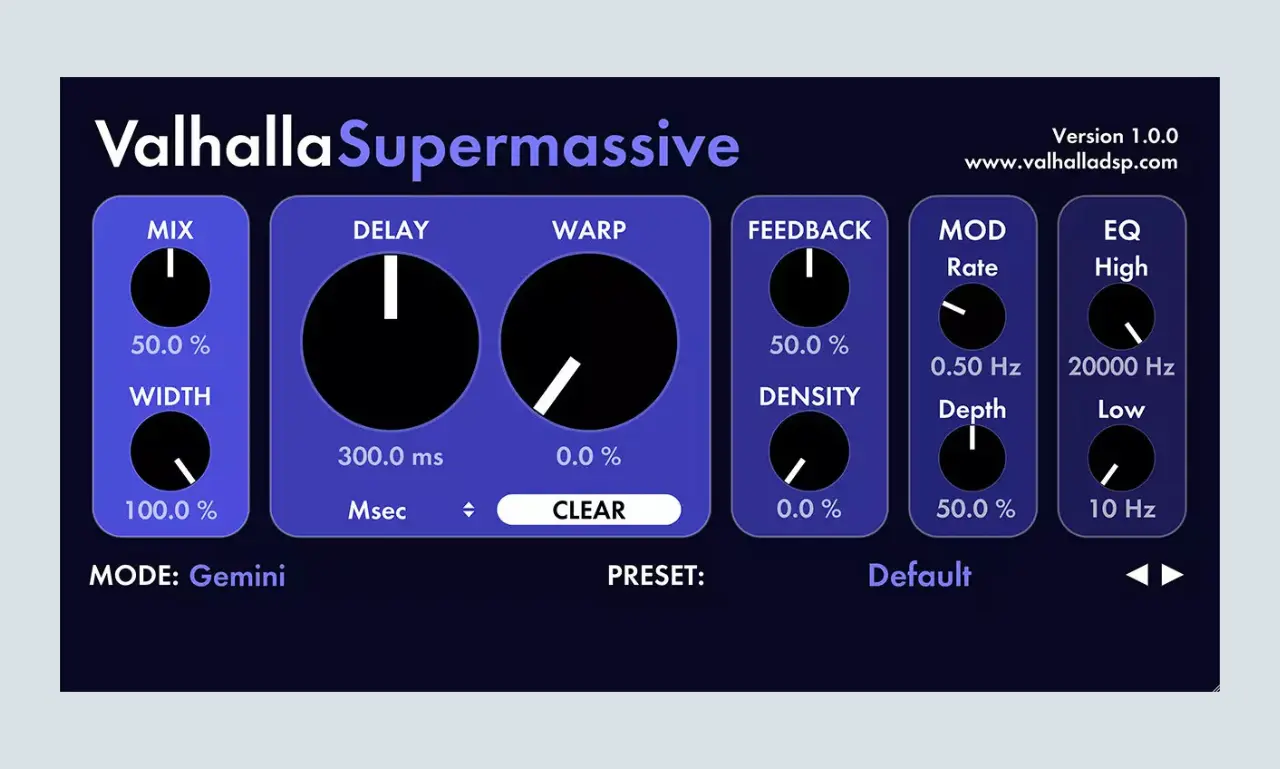
- Disclosure: Some links in this article are affiliate links. We may earn a small commission if you make a purchase, at no extra cost to you.
Every few years, a free plugin comes along that completely shifts what producers expect from “free.”
The Valhalla Supermassive is one of those plugins!
Valhalla Supermassive has been used on hit records, film scores, video game soundtracks, and countless bedroom productions. It has become one of the most downloaded free plugins in audio production history.
But here is the question we are answering today: in 2026, with so many free and paid reverb plugins on the market, does Valhalla Supermassive still hold up? Is it still worth installing?
That is exactly what we are going to find out.
Quick Verdict
Feature | Score |
Sound Quality | ⭐⭐⭐⭐⭐ |
Ease of Use | ⭐⭐⭐⭐⭐ |
CPU Efficiency | ⭐⭐⭐⭐ |
Versatility | ⭐⭐⭐⭐⭐ |
Overall Rating: 9.7 / 10 ⭐⭐⭐⭐⭐
- ✅ Best For: Ambient pads, vocal effects, cinematic textures, dream-like soundscapes.
- ❌ Not Ideal For: Natural, realistic room sounds.
- 💰 Price: Completely Free.
What Does Valhalla Supermassive Do?
The Valhalla Supermassive is a reverb and delay hybrid plugin designed to create massive, lush, otherworldly spatial effects. Unlike traditional reverb plugins that try to simulate natural acoustic spaces (rooms, halls, plates), Supermassive is intentionally designed to create unnatural, dream-like sounds that you simply cannot achieve with conventional reverbs.
Think of it this way:
- A traditional reverb simulates how sound behaves in a room.
- Valhalla Supermassive simulates how sound might behave in another dimension.
The result is a plugin that excels at creating:
- Massive ambient pads that feel like they go on forever.
- Dreamy vocal effects that sit beautifully in modern productions.
- Cinematic textures and atmospheres for film and game audio.
- Cosmic, evolving soundscapes for ambient and electronic music.
- Lush, ethereal delays that blur the line between echo and reverb.
The 22 Unique Modes of Valhalla Supermassive
This is the heart of what makes Valhalla Supermassive so powerful: 22 distinct modes, each with its own unique spatial character. Most reverb plugins offer 4 to 8 algorithms. Supermassive offers 22, and every single one of them sounds genuinely useful.
Each mode is named after a celestial object (galaxies, stars, or constellations) to match the “cosmic” theme of the plugin. As of version 5.0.0 (released for 2026 with full Mac M1/M2/M3/M4/M5 native support), Valhalla added the brand new Sirius mode, along with previous/next arrows for easier mode browsing.
Let us break down all 22 modes by character and use case.
Fast Attack Modes (Immediate Impact)
These modes respond instantly to the input signal, making them ideal for percussive elements and rhythmic material.
➤ Gemini
Fast attack, short decay, and high echo density. A tight, focused reverb that works beautifully on vocals, snares, and rhythmic elements where you need clarity.
➤ Lyra
Fast attack, short decay, and low echo density. A more sparse, transparent reverb that adds space without cluttering the mix.
➤ Capricorn
Fast attack, short decay, and medium echo density. Sits between Gemini and Lyra in density. A versatile, balanced reverb option.
➤ Scorpio
Fast attack, shorter decay, high echo density, with cross-channel feedback and filtering in the feedback loop for more realistic reverb decay. Excellent for natural-sounding rooms with a creative twist.
➤ Virgo
Fast attack, short decay, very low echo density, with filtering in the feedback loop. Perfect for complex, sparse echoes that need character.
➤ Pleiades
Fast attack, smooth decay, high echo density, with filtering in the feedback loop. One of the most realistic and transparent reverbs in the plugin.
➤ Sirius (NEW in v5.0.0)
Fast attack, smooth decay, low to very high echo density (depending on the density and control), and filtered feedback. Designed for clear and clean reverbs. This is the newest addition to Supermassive in 2026.
Medium Attack Modes (Balanced Response)
These modes offer a balance between immediate impact and a smoother build-up.
➤ Centaurus
Medium attack, longer decay, and medium to high echo density (depending on the density control). A lush, evolving reverb with a sense of mystery.
➤ Great Annihilator
Medium attack, very long decay, medium to high echo density (depending on the density control). One of the largest, most dramatic reverbs in the plugin. Perfect for cinematic moments.
➤ Libra
Medium attack, long decay, very high echo density, with lush, balanced modulation and filtering in the feedback loop. A musical, balanced reverb that works on almost any source.
➤ Large Magellanic Cloud
Medium attack, long reverb, with LOOOONG repeating echoes and long decay. Combines delay and reverb characteristics for evolving, otherworldly textures.
Slow Attack Modes (Gradual Build-Up)
These modes swell in gradually, making them ideal for pads, atmospheres, and emotional builds.
➤ Hydra
Fast-ish attack, shorter decay, and low to high echo density (depending on the density control). A flexible mode that can shift from sparse to dense based on your settings.
➤ Sagittarius
Slow attack, longer decay, and high echo density. Creates a sense of vast cosmic space, ideal for ambient music and film scoring.
➤ Andromeda
Slow attack, very long decay, and very high echo density. The most dramatic and evolving mode in the plugin. Perfect for cinematic risers and emotional swells.
➤ Triangulum
Slow attack, long reverb, with VERY LONG repeating echoes and long decay. The biggest delay-reverb hybrid in the plugin.
➤ Leo
Very slow attack, super long decay, very high echo density, with filtering in the feedback loop. Creates massive, evolving spaces that breathe and move.
Strange & Experimental Modes
These modes are designed for creative sound design and unconventional production.
➤ Cirrus Major
Low/medium echo density with strange repeating patterns and a fast attack. Great for creating unusual, rhythmic spatial effects.
➤ Cirrus Minor
Low echo density with strange repeating patterns, fast attack. A smaller, more intimate version of Cirrus Major.
➤ Cassiopeia
Initially low echo density that quickly builds to long and lush reverbs, with mysterious repeating patterns and a fast attack. One of the most unique modes in the plugin.
➤ Orion
The much bigger version of Cassiopeia. Low echo density that can build to enormous reverbs, fast attack with strange resonances, and repeating patterns. Excellent for ambient and experimental music.
EchoVerb Modes (Delay-Reverb Hybrids)
These dedicated modes blur the line between echo and reverb.
➤ Aquarius
A dedicated EchoVerb algorithm with a strong audible echo/delay that can morph into a lush reverb with higher density settings. Perfect for rhythmic, evolving spatial effects.
➤ Pisces
The bigger sibling of Aquarius. EchoVerb has even denser and lusher reverbs on tap. Combines the rhythmic qualities of delay with the wash of reverb.
Pros & Cons
✅ Pros
- Completely free with no limitations, trial period, or nag screens
- 22 unique modes (including the new Sirius mode in v5.0.0) covering everything from subtle reverb to massive cosmic textures
- Professional-grade sound quality from one of the most respected reverb developers in the world
- Active modulation creates living, breathing reverb tails.
- EchoVerb hybrid modes (Aquarius, Pisces) blur the line between delay and reverb beautifully.
- Filtering in the feedback loop on newer modes (Scorpio, Libra, Leo, Virgo, Pleiades, Sirius) creates more realistic reverb decay.
- Self-documenting interface — rollover tooltips explain every control.
- Previous/next mode arrows browse 22 modes fast and intuitively.
- Windows and native Mac support for Intel & M1, M2, M3, M4, and M5 chips (ready for macOS Tahoe).
- Regular updates from Valhalla DSP: Sean Costello continues to improve the plugin.
- Free for commercial use with no royalties or licensing restrictions.
- Available in all major plugin formats (VST2, VST3, AU, AAX).
- Works on virtually any source material from vocals to sound design.
❌ Cons
- Can be CPU-intensive on long, dense reverb tails with high modulation settings
- Not designed for realistic, natural room sounds; look elsewhere for traditional convolution-style reverbs
- Modulation can become too obvious if pushed too hard on certain source material.
- Limited dry signal control: you cannot fully separate the dry and wet processing chains.
- 22 modes can be overwhelming for beginners (though the new previous/next arrows help).
- Long decay times can muddy the mix if not used carefully.
FAQ:
Does Valhalla Supermassive work on the master bus?
Yes, but use it carefully. Supermassive can be heavy and obvious, which is not always appropriate for master bus processing. If you want to add a subtle sense of space to your master, use one of the more transparent modes (Pleiades, Sirius, Libra) with the mix at around 5–15%.
Which mode is best for vocals?
For traditional vocal reverb, Pleiades and Sirius are excellent choices thanks to their transparent character and filtered feedback. For dreamy pop vocals, Gemini and Lyra work beautifully. For ad-libs and background harmonies, try Cassiopeia or Orion for that ethereal, evolving quality.
Which mode is best for ambient music?
For ambient music, the slow attack modes shine the brightest. Try Andromeda, Sagittarius, Leo, or Great Annihilator for massive, evolving textures. The Large Magellanic Cloud and Triangulum modes are perfect for combining delay and reverb into one cohesive ambient texture.
Is the modulation always on?
You can effectively turn off the modulation by setting both the Modulation Rate and Modulation Depth knobs to zero. This gives you a static reverb without any pitch-shifting effects.
How much CPU does Supermassive use?
Supermassive uses moderate CPU resources, especially on longer reverb tails with high density and modulation settings. On a modern computer, you can run multiple instances without issue. On older systems, you may want to freeze or render channels with heavy Supermassive processing.
Final Thoughts
The Valhalla Supermassive is not just a great free plugin. It is one of the most generous gifts to the audio production community in the history of digital audio.
When Sean Costello and Valhalla DSP released Supermassive in 2020, they gave producers a professional-grade reverb and delay plugin with capabilities that simply did not exist at any price point before.
Are there situations where you might want a more specialized or natural-sounding reverb? Yes. For traditional room and hall emulation, paid options like FabFilter Pro-R 2 or Valhalla VintageVerb are better choices. But for creative, ambient, cinematic, and modern production work, Valhalla Supermassive remains one of the best reverb plugins available, and the fact that it is still completely free in 2026 continues to feel like a miracle.
You Might Also Like:
- 12 Best Free Reverb VST Plugins for Lush Vocals
- Softube Saturation Knob Review (Free Saturation Plugin)
- 10 Best Free Saturation VST Plugins for Warmth
- 8 Best Free Autotune VST Plugins for Vocals
- 15 Best Free Drum VST Plugins for Punchy Beats

AudioPluginList Team
We are a collective of music producers, sound designers, and audio engineers. We rigorously test every plugin in our studios to ensure it deserves a spot in your workflow. Our mission is to help you make pro music on any budget. Read More »